

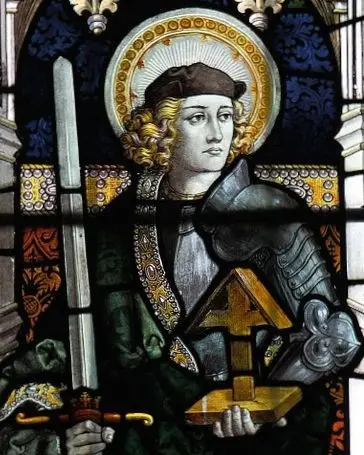
Saint Alban
Roman-era resident of Verulamium, traditionally Britain's first martyr
- Rank
- Saint
- Kind
- Martyr, Layperson
- Feast
- 20 June
- Countries
- United Kingdom
Life story
Alban is traditionally held to have been a Roman-era citizen living at Verulamium, now the city of St Albans in England, around the year 300. Almost nothing certain is known about his background or age. Every surviving account of him was written centuries later, and the historical details are debated.
The fullest story is by Bede, in his Ecclesiastical History of the English People, written around 731. According to Bede, Alban sheltered a priest who was being hunted and then put on the priest's cloak so that soldiers would seize him in his place. When brought to trial he refused to worship the Roman gods and was executed. The priest was later called Amphibalus in tradition. Bede also reports some wonders around the execution, such as Alban crossing a river on dry ground; this is tradition, not confirmed by contemporary sources.
His date cannot be settled: Bede implies 305, while scholars have proposed various years between 209 and 313. The earliest evidence for his veneration is the record of Bishop Germanus of Auxerre visiting his shrine in 429.
Centuries later King Offa of Mercia founded a Benedictine abbey at the site of his veneration, around 793. The abbey church became the cathedral of the Diocese of St Albans in 1877. His feast is 20 June in the current Roman calendar and 22 June in the Anglican calendar.
Works and witness
- Regarded as the first martyr of Britain
- According to Bede, sheltered a hunted priest and was executed in his place
- Bishop Germanus visited his shrine in 429
- A Benedictine abbey at St Albans was founded by King Offa around 793
- His date cannot be settled
Patron of
Converts, Refugees, Torture victims
Saints from the same country
References
- Bede, Historia ecclesiastica gentis Anglorum, I.7
- Constantius of Lyon, Vita Germani
- Martyrologium Romanum
Written by Anawim from documented history. Some details about ancient saints rest on tradition and are marked as such.