

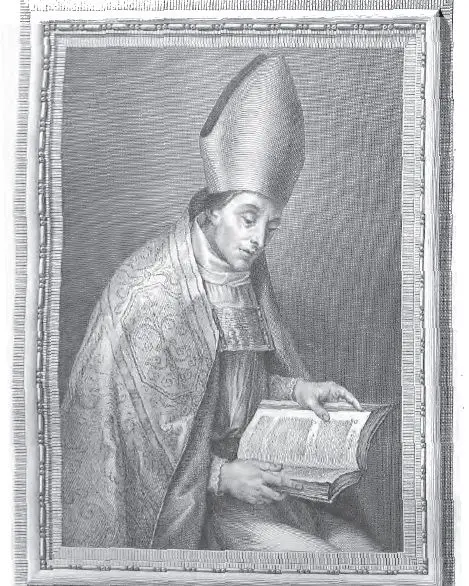
Saint Thomas of Villanova
The archbishop of Valencia known as the father of the poor
- Rank
- Saint
- Kind
- Bishop, Religious
- Life
- 1486 – 1555
- Era
- 16th century
- Feast
- 10 October
- Countries
- Spain
Life story
Thomas was born around 1486 or 1488 (sources differ) at Fuenllana in Spain and grew up at Villanueva de los Infantes, from which he took the name Villanova. He studied arts at the University of Alcalá and then taught there. Around 1516 he joined the Augustinian order at Salamanca, and he was ordained priest around 1520.
Within the order he held a series of offices: professor of theology, prior and then provincial superior. He was known as a preacher and as an adviser valued by Emperor Charles V. He once refused the archbishopric of Granada, but in 1544 he accepted appointment as archbishop of Valencia, and he was consecrated in 1545.
In Valencia he had food and money given out to the poor every day, helped orphans and abandoned children, and paid attention to the training of the clergy, placing capable priests in the parishes. Several biographies relate that he lived simply himself, wearing an old habit that he kept mending. He died in Valencia on 8 September 1555 after a heart attack. He was beatified in 1618 under Pope Paul V and canonised in 1658 under Alexander VII. His feast in the Church's general calendar falls on 10 October. Accounts of his years as archbishop stress how little he kept for himself, and the city remembered him above all for these daily distributions. Villanova University in Pennsylvania, run by Augustinians, is named after him.
Works and witness
- Studied and taught arts at the University of Alcalá
- Joined the Augustinians around 1516 and served as provincial superior
- Archbishop of Valencia from 1544
- Gave daily relief to the poor and helped orphans
- Canonised in 1658
Saints from the same country
References
- Martyrologium Romanum
- Catholic Encyclopedia (1907–1912), entry on Thomas of Villanova
- Dicastery for the Causes of Saints – biographical profile
Written by Anawim from documented history. Some details about ancient saints rest on tradition and are marked as such.