Divine Mercy Sunday
He made the Second Sunday of Easter Divine Mercy Sunday for the whole Church on 30 April 2000.


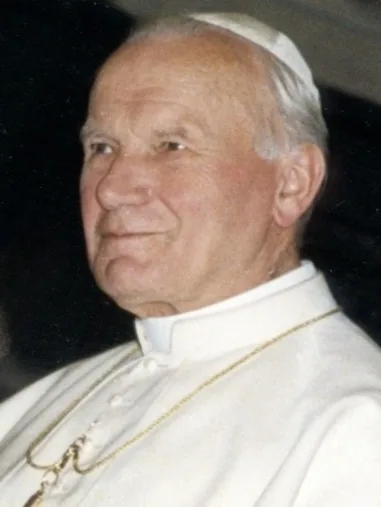
1920 – 2005
The Pope of Divine Mercy
From a Wadowice boy who lost his mother young, through years as a labourer under occupation, to the chair of Peter, Karol Wojtyła walked with the message of mercy all his life. He opened Faustina's cause in Kraków and carried her message to the whole world.
Karol Józef Wojtyła was born on 18 May 1920 in Wadowice. His mother Emilia died when he was nine; his brother Edmund died three years later. His father, a retired soldier, raised him alone and taught him to pray every day.
In 1938 he went to Kraków to study literature and drama at the Jagiellonian University.
When Germany occupied Poland the university was closed. He worked in a quarry and a chemical plant to avoid forced labour, and at the same time studied in the secret seminary of Archbishop Sapieha. He was ordained a priest on 1 November 1946.
After further study in Rome he served as curate in Niegowić and Kraków and taught ethics. He was consecrated bishop on 28 September 1958, became Archbishop of Kraków in 1964, and Paul VI made him a cardinal on 26 June 1967. He took part in the Second Vatican Council.
On 21 October 1965 he opened the inquiry into the life and virtues of Sister Faustina Kowalska, who had died in his own diocese. He sent the acts to Rome on 31 January 1968, and in 1978 the ban on the devotion was lifted.
He was elected pope on 16 October 1978 and took the name John Paul II. His pontificate lasted more than 26 years; he visited 129 countries and began World Youth Day.
His second encyclical, Dives in Misericordia (Rich in Mercy), appeared on 30 November 1980. On 18 April 1993 he beatified Faustina, and on 30 April 2000 he canonised her and set up Divine Mercy Sunday. On 17 August 2002, at the Shrine in Łagiewniki, he solemnly entrusted the world to Divine Mercy.
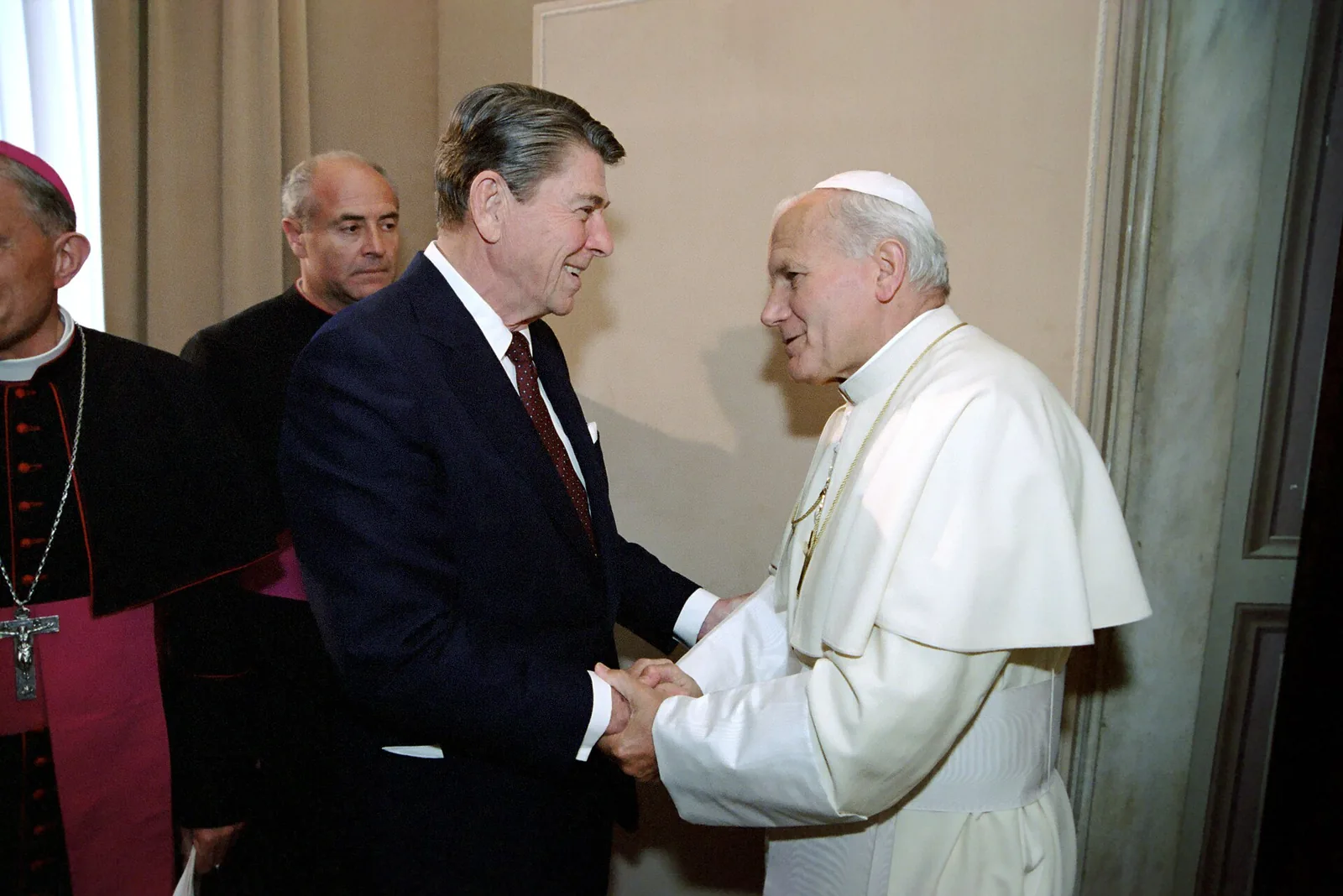
He died on the evening of 2 April 2005, the evening before Divine Mercy Sunday. The next day, at the Mass for him in St Peter's Square, the Regina Caeli he had prepared for that feast was read out.
Benedict XVI beatified him on 1 May 2011, and Pope Francis canonised him on 27 April 2014 together with John XXIII. Both days were Divine Mercy Sunday.
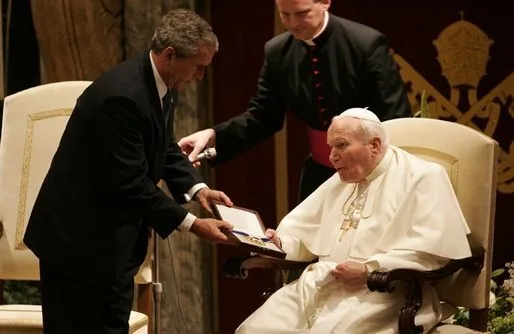
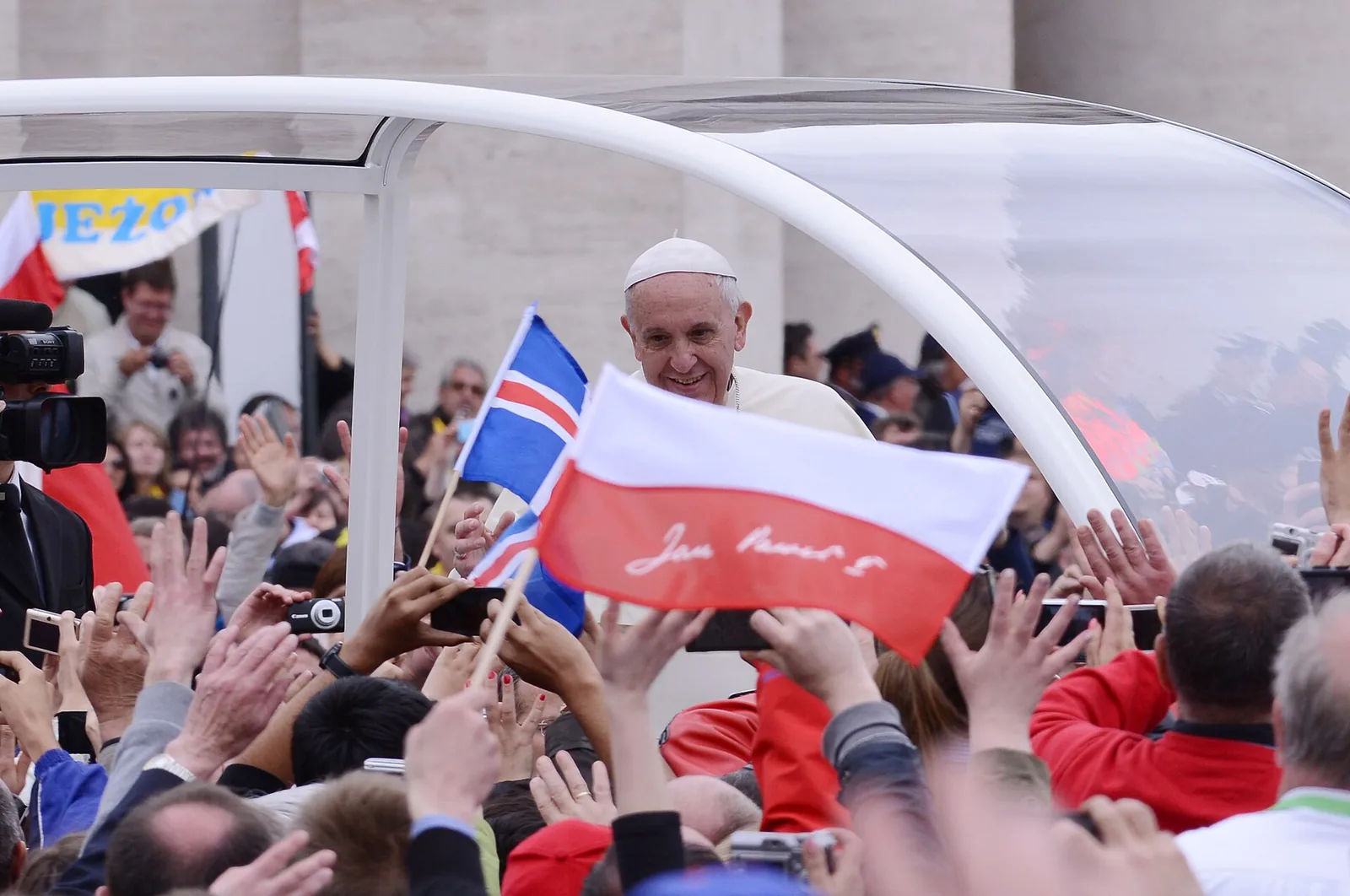
Each line below is one sentence from his homilies or documents, with a link to the official text on vatican.va.
Like Saint Faustina, we wish to proclaim that apart from the mercy of God there is no other source of hope for mankind.
Homily at the Shrine of Divine Mercy, Łagiewniki, 17 August 2002 Read the full text
Today, therefore, in this Shrine, I wish solemnly to entrust the world to Divine Mercy.
Łagiewniki, 17 August 2002 Read the full text
In the mercy of God the world will find peace and mankind will find happiness!
Łagiewniki, 17 August 2002 Read the full text
…the Second Sunday of Easter, which from now on throughout the Church will be called “Divine Mercy Sunday”.
Homily at the canonisation of Faustina, St Peter's Square, 30 April 2000 Read the full text
For mercy is an indispensable dimension of love; it is as it were love's second name.
Encyclical Dives in Misericordia, no. 7, 30 November 1980 Read the full text
The Church must profess and proclaim God's mercy in all its truth, as it has been handed down to us by revelation.
Dives in Misericordia, no. 13 Read the full text
How much the world needs to understand and accept Divine Mercy!
Regina Caeli prepared for Divine Mercy Sunday, 3 April 2005 Read the full text
He made the Second Sunday of Easter Divine Mercy Sunday for the whole Church on 30 April 2000.
The 1980 encyclical set mercy at the heart of Christ's message, years before Faustina was beatified.
In 2002 he entrusted the world to Divine Mercy at the place where Faustina lived and died, and dedicated the new shrine there.
He died on the eve of the feast he had set up, and he had himself written the last prayer to be read on that day.
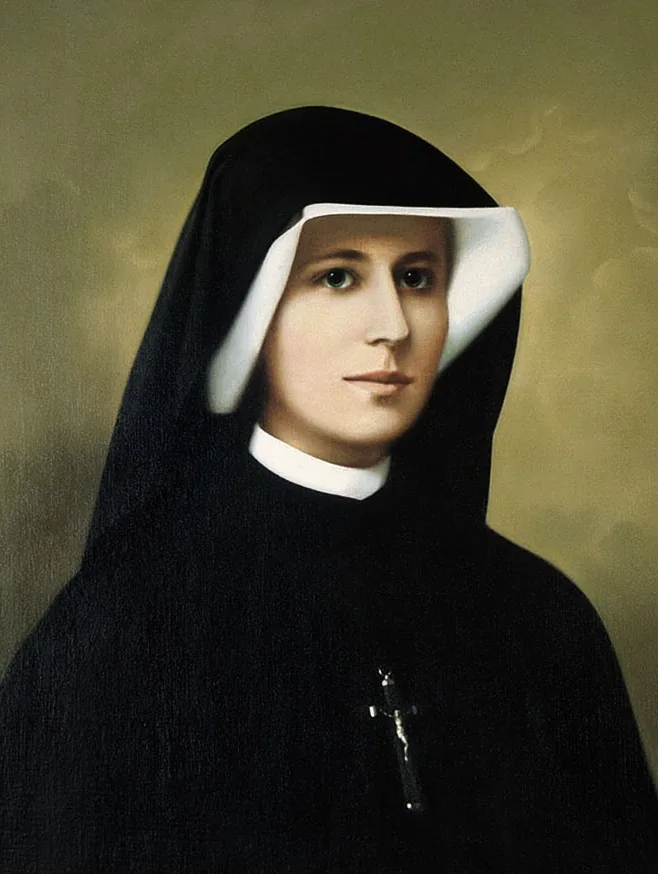 Saint Faustina KowalskaSecretary of Mercy1905 – 1938