The Diary
More than 1,800 passages written by a barely schooled sister between kitchen and garden work. The Diary is now among the most widely read spiritual texts of the 20th century.


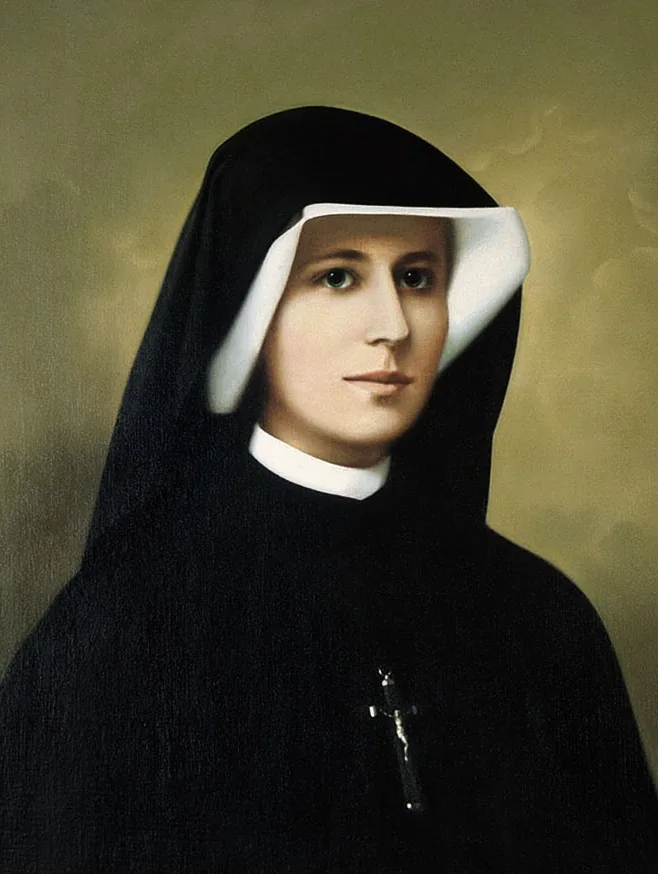
1905 – 1938
Secretary of Mercy
A farm girl with less than three years of school, who entered the convent to do the humblest work in the house. Jesus chose her as the secretary of His mercy. The Diary she wrote in the breaks between chores has travelled the world.
Helena Kowalska was born on 25 August 1905 into a poor but devout farming family, the third of ten children of Stanisław and Marianna. She was baptised in the parish of Świnice Warckie and went to school for less than three years.
At sixteen she went into service in Aleksandrów Łódzki and then Łódź to help her parents. She had long wished to enter a convent, but her parents refused. In 1924, at a dance in Łódź, she saw the suffering Jesus beside her. She left, went into the cathedral and heard Him tell her to go to Warsaw and enter a convent.
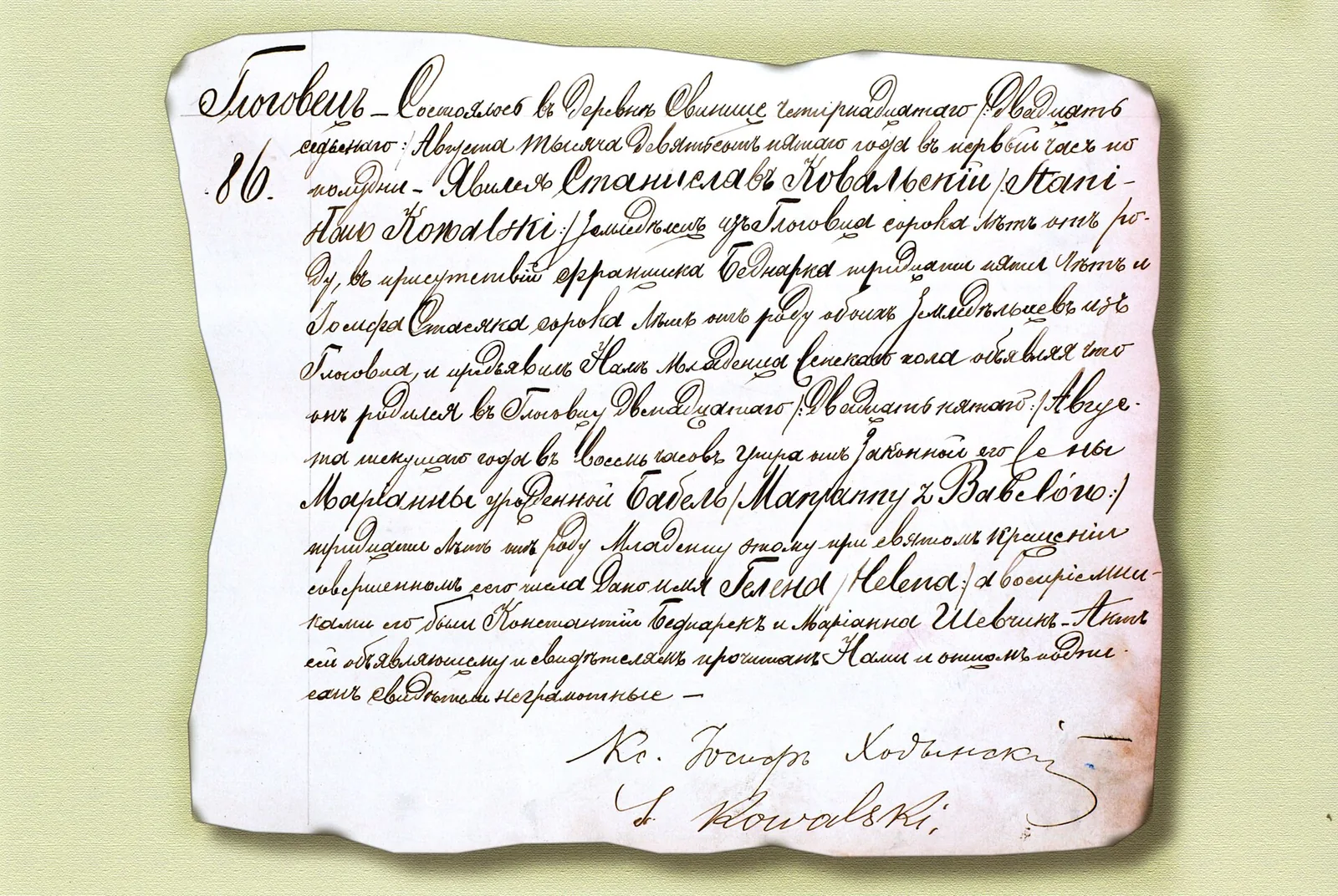
On 1 August 1925 she entered the Congregation of the Sisters of Our Lady of Mercy in Warsaw. On 30 April 1926 she received the habit and the name Maria Faustina of the Blessed Sacrament; she made her first vows in April 1928. She worked in turn as cook, gardener and doorkeeper in several houses, among them Vilnius (1929) and Płock (from 1930).
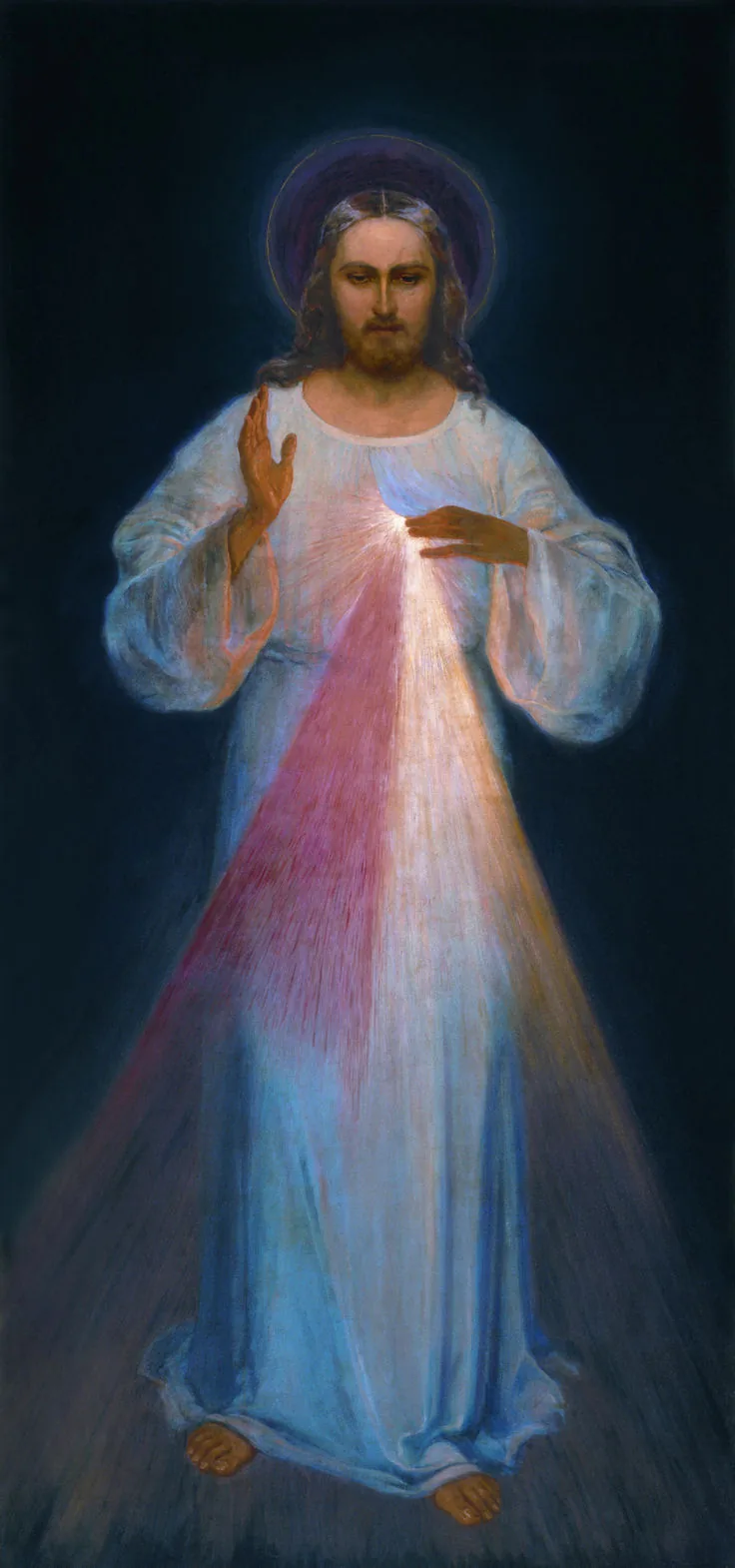
On the evening of 22 February 1931, in her cell in Płock, she saw Jesus in a white garment, with two rays, one red and one pale, coming from His chest. He asked her to have an image painted as she saw Him, signed “Jesus, I trust in You”, and to make the Sunday after Easter the Feast of Mercy (Diary, §47–49).
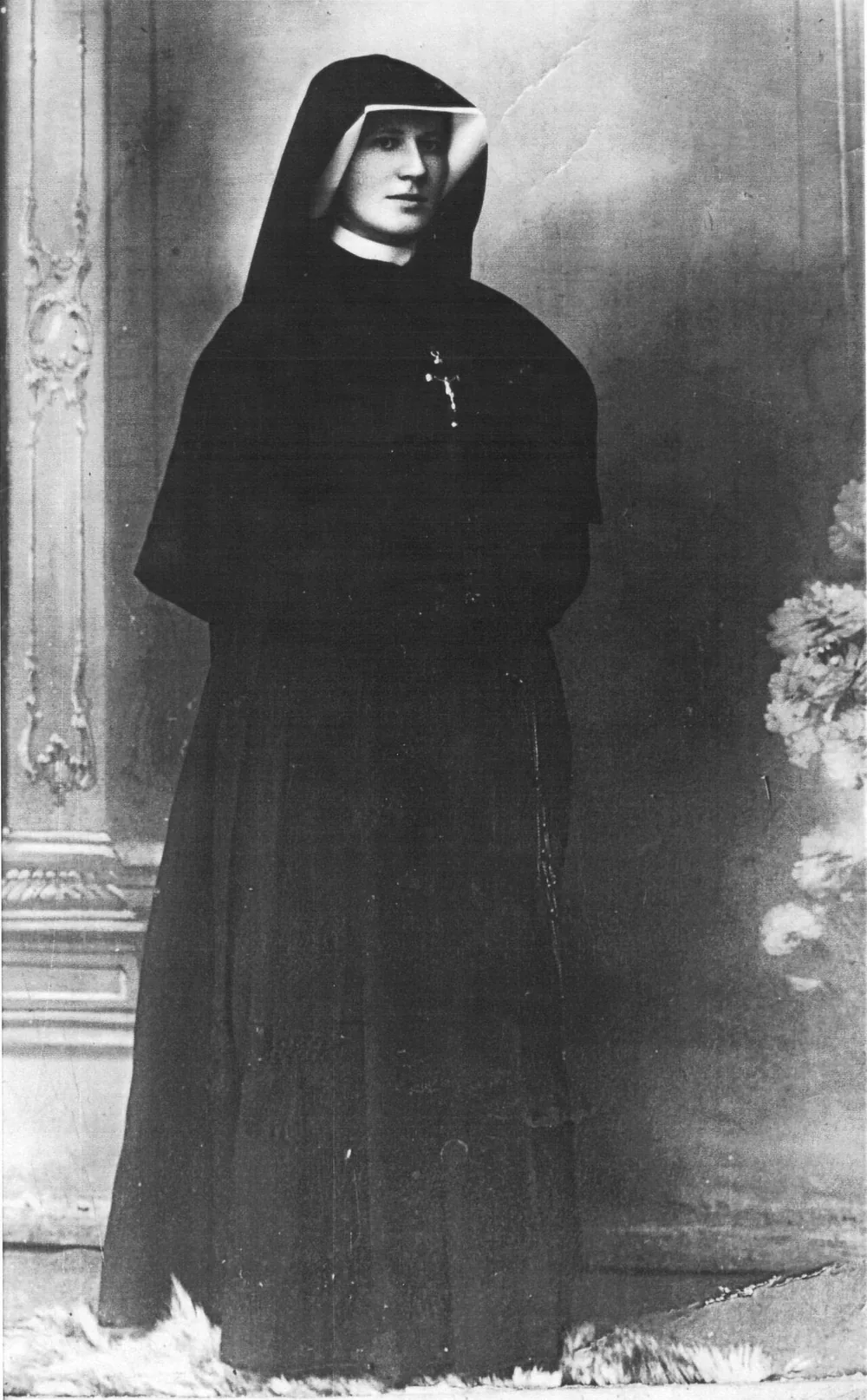
On 1 May 1933 she made her perpetual vows at Łagiewniki (Kraków) and returned to Vilnius as gardener. There she met Fr Michał Sopoćko, now Blessed, who became her confessor and director. He had a psychiatrist examine her, who found her entirely sound, and he asked the painter Eugeniusz Kazimirowski to paint the image from her description. It was finished around June 1934.
Fr Sopoćko also told her to write down what was happening: the Diary, six notebooks she wrote in Vilnius and Kraków between 1934 and 1938. From 26 to 28 April 1935, at the close of the Jubilee of the Redemption, the image was shown in public for the first time at the Ostra Brama shrine in Vilnius. On 13–14 September 1935 she was taught the Chaplet of Divine Mercy (Diary, §474–476).
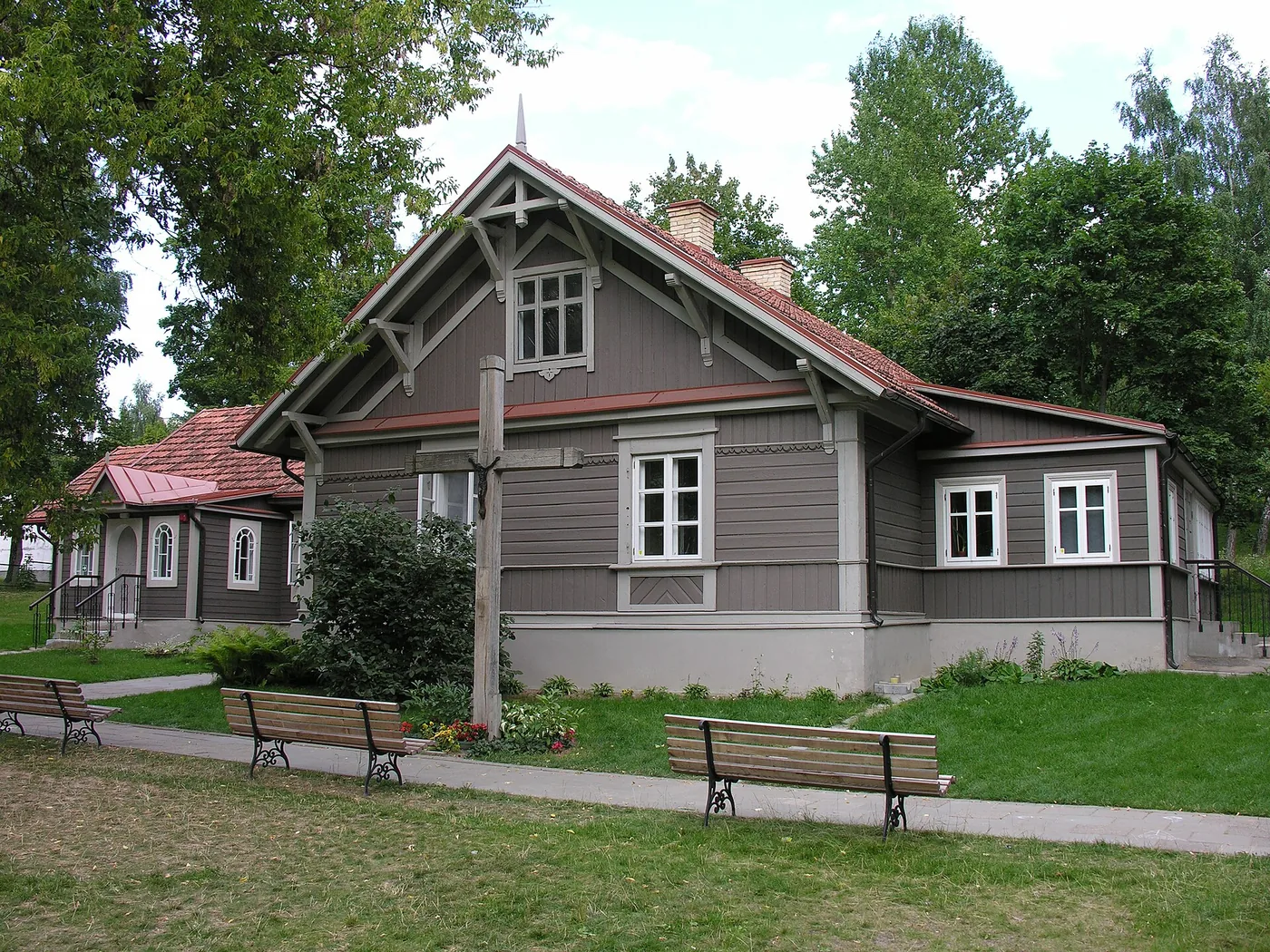
From 1936 she lived in Kraków and spent time in the Prądnik hospital with tuberculosis. In October 1937 Jesus taught her about the Hour of Mercy at three in the afternoon (Diary, §1320). The last lines of the Diary were written in June 1938.
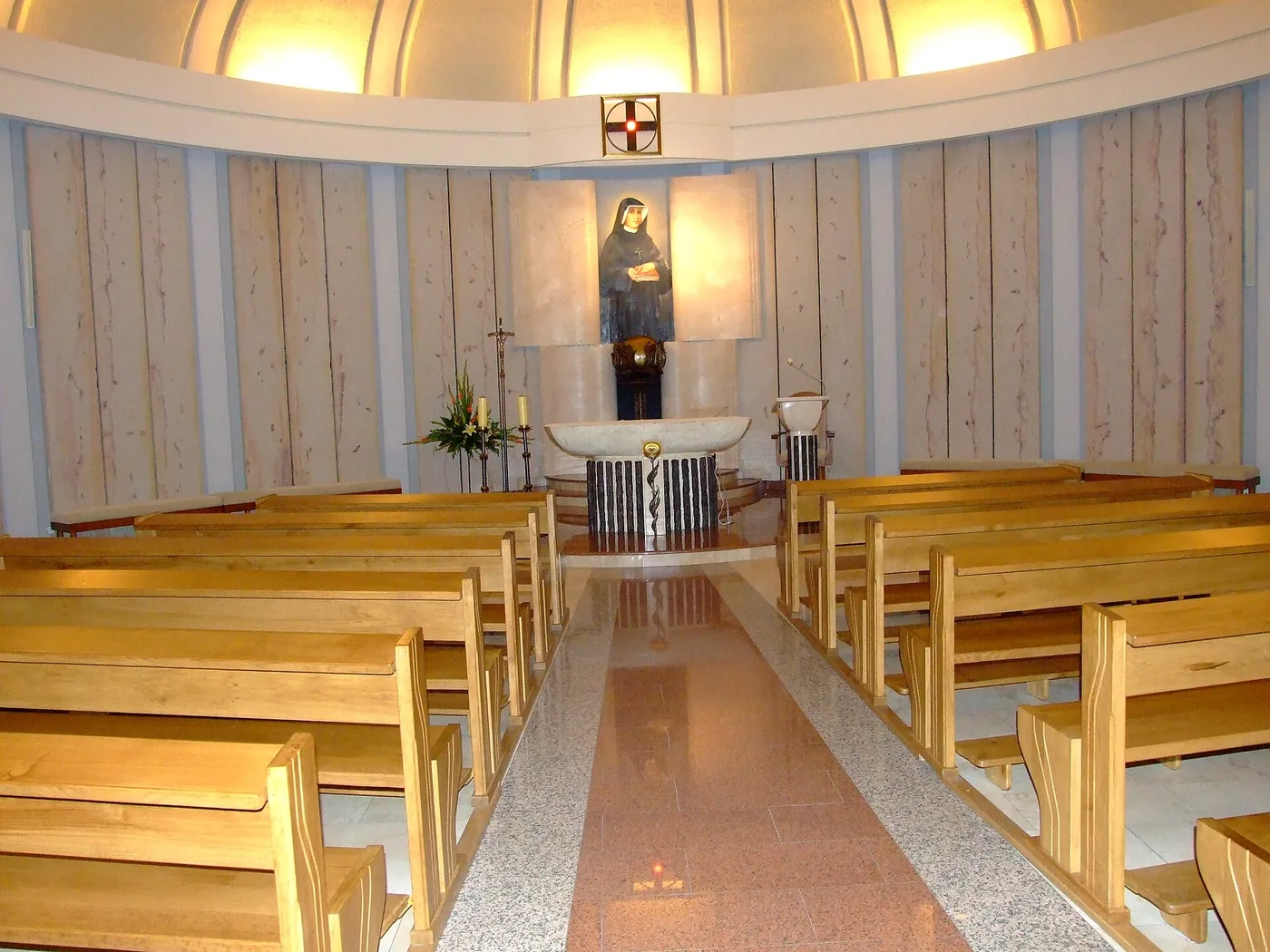
She died on 5 October 1938 in Kraków-Łagiewniki, aged 33, and was buried on 7 October. Her tomb is now in the Shrine of Divine Mercy at Łagiewniki.
In 1959 the Holy Office forbade the spreading of images and writings promoting the devotion in the form Faustina had received. On 15 April 1978 the Congregation for the Doctrine of the Faith lifted the ban, having obtained many original documents unknown in 1959. Cardinal Karol Wojtyła, Archbishop of Kraków, had opened the investigation into her life and virtues on 21 October 1965.
John Paul II beatified her on 18 April 1993 and canonised her on 30 April 2000, the Second Sunday of Easter. That day he declared the Second Sunday of Easter would be called Divine Mercy Sunday throughout the Church. She was the first saint of the new millennium.
These are words Jesus spoke to Faustina, and she wrote down, taken from the Diary. Each passage carries its number so you can read it in full.
Mercy is to be proclaimed as the greatest attribute of God; all His works are crowned with mercy.
Diary, §301 (summarised)
Whenever she wants to make Jesus happy, she is to speak to the world about His great and unfathomable mercy.
Diary, §164 (summarised)
Jesus has set up a throne of mercy on earth, the tabernacle, with no guards around it: we can come at any hour.
Diary, §1485 (summarised)
God works mercy in every soul; whoever trusts in His mercy will not perish.
Diary, §723 (summarised)
The greater a soul's misery, the greater its right to God's mercy; on the cross the fountain of mercy was opened for all souls without exception.
Diary, §1182 (summarised)
Jesus calls Faustina the apostle of His mercy and tells her not to be discouraged by difficulties in proclaiming it.
Diary, §1142 (summarised)
Faustina's task is to write down everything Jesus reveals about His mercy, so that readers will be consoled and find courage to approach Him.
Diary, §1693 (summarised)
English lines from the Diary are short paraphrases, not the published translation.
More than 1,800 passages written by a barely schooled sister between kitchen and garden work. The Diary is now among the most widely read spiritual texts of the 20th century.
What she asked for in 1931 became a feast of the whole Church in 2000, on the very day of her canonisation.
Millions pray the chaplet and pause at three in the afternoon each day, as she was taught.
The house where she lived and died is now the centre of Divine Mercy pilgrimage; John Paul II dedicated the new shrine on 17 August 2002.
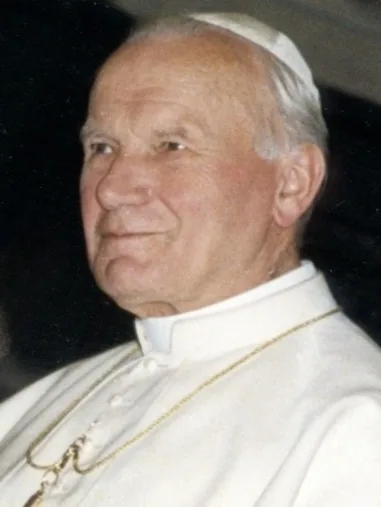 Saint John Paul IIThe Pope of Divine Mercy1920 – 2005